Basilisks
The Reincarnated Demon King's Host Just Wants to Live in Peace, But the Hero Won't Leave Him AloneBasilisks are demon-made creatures whose blood and venom contain dark magic. In the novel, their importance is established through the poisoning of Khal, whose injury becomes one of the most demanding wounds Theo has ever treated. The basilisk therefore functions not merely as a dangerous beast but as a living conduit of demonic corruption, linking bodily illness to the wider threat represented by Demonkind.
Nature and Threat
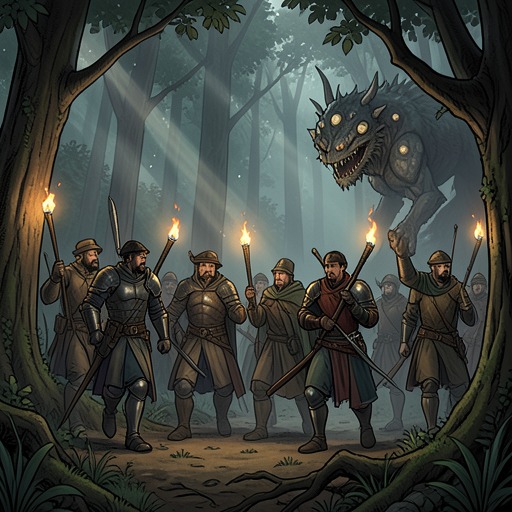
Basilisk venom is unusually lethal because it is infused with the same dark magic that exists in the creatures’ bodies. Mal identifies the connection directly, explaining that basilisks are demon-made and that their magic enters both their blood and venom. This makes their poison different from an ordinary natural toxin: healing must overcome a magical contamination as well as physical damage.
The danger is evident in Khal’s condition after he is bitten. The puncture marks on his torso have stopped bleeding, but the surrounding skin has turned dark purple while discolored veins spread beneath it. His normally tan complexion has become ashen, and sweat covers his body. Although Khal is part orc and therefore more resistant to poison than many others, Mal observes that he should already be dead. His survival is presented as a temporary reprieve rather than evidence that the venom is manageable.
The Attack on Khal
Khal’s companions bring him to Theo after a day of failed healing attempts. They have no healer in their party, and their repeated revival spells have not halted the poison’s progress. The townspeople’s claim that Theo works miracles turns the basilisk bite into an urgent test of his reputation as well as a medical emergency. The group’s dependence on him also exposes the limits of their existing magical resources: repeated intervention has not been enough because the wound requires direct treatment of its corrupted source.
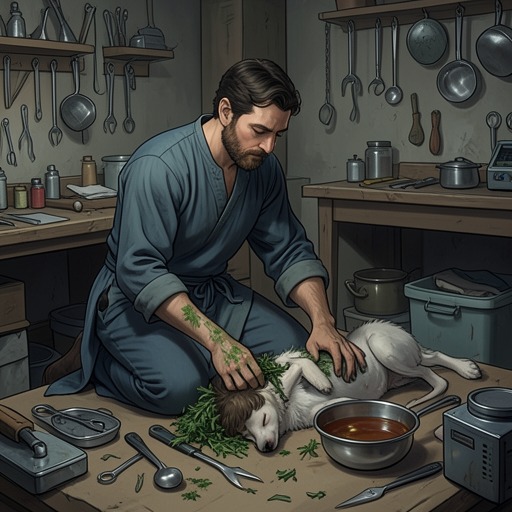
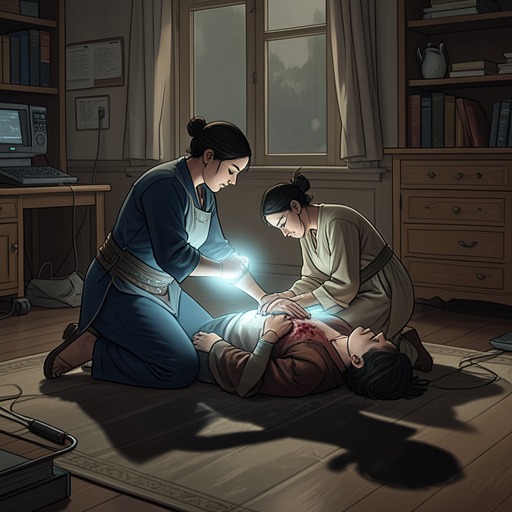
Theo first cuts an X across each puncture with a hot knife, causing fresh blood to spill from wounds that had previously ceased bleeding. Khal jerks unconscious beneath the treatment, and his companions must pin him down. Theo then places both hands over the injuries and raises his healing magic. The scene makes the poison materially visible through the spreading discoloration, while the dark magic gives the illness an invisible but active presence that Theo must locate and destroy.
Treatment and Its Cost
Theo’s magic initially appears calm, described through images of a sea at sunset, a summer day, and the moments before dawn. Yet that calm contains the possibility of sudden chaos and destruction. The contrast is particularly apt for basilisk venom: the wound looks still and bloodless on the surface while lethal corruption continues to advance underneath. Theo’s emerald magic becomes almost painfully bright as he concentrates on the poison.
The treatment is violent and exhausting. Khal repeatedly jerks against the silk restraints and the hands holding him in place, screaming while Theo focuses on eliminating the venom. Theo cannot spare magic to reduce the pain until the poison has been destroyed, and his shaking arms provide the clearest sign of his fatigue. He considers it the worst wound he has ever treated. Mal advises using Vynnil root to address lasting damage and urges Theo to commit all his healing talents to the effort, showing that even successful removal of the venom may leave consequences that require further care.
Theo eventually feels the last of the poison dissipate. Only then can he redirect his magic to ease Khal’s pain temporarily, allowing the large warrior’s body to relax rather than continue fighting the toxin. The sequence distinguishes between stopping the basilisk’s immediate magical assault and repairing the damage it has already caused; the requested herb and continued healing remain necessary because survival does not mean instant restoration.
Wider Significance
The basilisk bite connects individual vulnerability with collective dependence. Khal’s companions arrive as an armed heroic group, yet their strength cannot protect one of their own from a demon-made creature. Their failure forces them to seek out a local healer, while Theo must reveal the power he would rather not display before Heroes. The crisis consequently places the healer at the center of the party’s survival, even though the party’s broader mission and status might suggest that combat power should matter most.
Basilisks also belong to the novel’s recurring pattern of supernatural hazards that communities must recognize, contain, and survive. Later travel is shaped by concern over dangerous conditions, and the narrative repeatedly presents extraordinary threats through concrete bodily symptoms, emergency decisions, and the allocation of protective or healing resources. The basilisk’s distinctive danger lies in the way its venom carries demonic magic into the victim: the creature turns an attack into an internal invasion, making the boundary between monster and wound impossible to keep intact.
For that reason, basilisks represent a particularly concentrated form of Demonkind’s danger. They are not merely predators encountered in the wild. Their creation by demons gives their poison a history and an allegiance beyond the immediate bite, while Khal’s recovery depends on Theo’s ability to confront that inherited dark magic directly. The episode establishes the basilisk as both a lethal creature and a reminder that demonic power can persist inside ordinary physical injury long after the attacker is gone.